
Bitcoin Mining at a Turning Point: From Hashrate Wars to the Age of AI and Efficiency

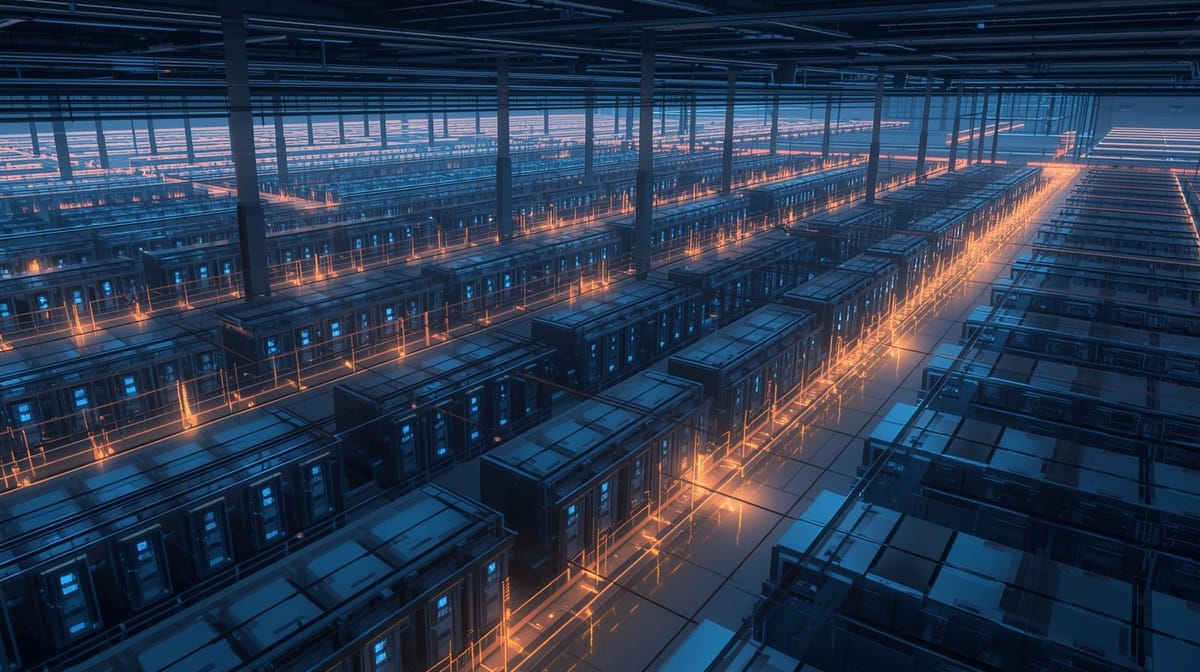
The Bitcoin mining industry is entering one of its most transformative phases in recent years. This shift isn’t driven by Bitcoin’s price alone, but by a fundamental change in the mining business model itself. Mining difficulty is falling, global hashrate is shifting, and major players are increasingly turning to AI and data centers as new sources of revenue.
So, what’s really happening?
🔧 Falling Difficulty: Mining Gets “Easier,” But Not Cheaper
In recent difficulty adjustments, Bitcoin’s mining difficulty has declined. From a technical standpoint, this means:
- Slightly better odds of finding a block
- Lower computational pressure per miner
- Temporary relief for highly efficient operations
However, this does not signal a new mining boom. Difficulty is dropping largely because some miners have exited the network, squeezed out by high electricity costs, aging hardware, and shrinking margins after the halving.
In short:
Mining is becoming easier — but not automatically more profitable.
📉 Margin Pressure: The Post-Halving Reality
After the halving, block rewards were cut, while:
- Electricity prices remain elevated
- Cooling and infrastructure costs continue to rise
- Competition among miners stays intense
Many small and mid-sized mining operations are now in survival mode. Even large public miners are rethinking a critical question:
Is Bitcoin mining still the best use of our power capacity?
That question is driving a major industry pivot.
🤖 The AI & HPC Pivot: Same Power, Higher Returns
This is currently the hottest topic in the mining world.
An increasing number of mining companies are:
- Converting mining facilities into AI data centers
- Leasing power and infrastructure for AI and high-performance computing (HPC)
- Running hybrid models that combine Bitcoin mining and AI workloads
The logic is simple:
- AI workloads can generate significantly higher revenue per megawatt than Bitcoin mining
- AI contracts offer more predictable cash flows compared to volatile mining rewards
As a result, portions of Bitcoin’s global hashrate are declining — not because infrastructure is shutting down, but because power is being reassigned.
🚀 Shifting Power Dynamics: Hashrate Leadership Is Changing
These conditions are reshaping the competitive landscape:
- Former market leaders are losing dominance
- Fast-adapting miners are gaining ground
- Energy efficiency and access to low-cost power have become decisive advantages
Today, success is no longer about who owns the most machines, but:
who manages energy the smartest.
🌍 Regulation and Geopolitics Still Matter
Beyond technology and economics, mining remains heavily influenced by:
- Local energy policies
- Crypto and AI regulations
- Political stability and industrial licensing
Regions with cheap power but uncertain regulation are becoming less attractive, while jurisdictions that are data-center-friendly and energy-positive are emerging as new mining hubs.
🧠 Conclusion: Bitcoin Mining Is Growing Up
The era of “plug in ASICs and print money” is over.
What’s emerging instead is a more mature industry:
- Mining as a convergence of energy and technology
- Profitability driven by efficiency, scale, and diversification
- AI not as Bitcoin’s enemy, but as both a competitor and a lifeline for miners
Bitcoin mining isn’t dying — it’s evolving.
And as always in crypto:
those who fail to adapt will be left behind.
About Loka Mining
This article was published by Loka Mining, your trusted partner in cryptocurrency mining and blockchain technology. Follow us on X @lokamining for the latest insights on mining, cryptocurrency trends, and industry updates.
Connect with us: 🌐 Website: lokamining.com 🐦 X (Twitter): @lokamining 📧 Contact: hello@lokamining.com